Nov 24, 2025
Plural Events: Toward a Distributed Infrastructure for Networked Deliberation
The accelerating complexity of contemporary social challenges has renewed interest in methodologies that support diverse forms of participation, enable constructive disagreement, and enhance the collective production of knowledge.
Plural Events
The accelerating complexity of contemporary social challenges has renewed interest in methodologies that support diverse forms of participation, enable constructive disagreement, and enhance the collective production of knowledge. In this context, *Plural Events* represent an emerging model for distributed, semi-synchronous deliberation across geographically dispersed communities. Designed in collaboration with the Hubs Network, RadicalxChange chapters, and practitioners of community knowledge architectures: Community Gardening and open source software devlopers. Plural Events operationalize the concept of “plurality” articulated by Audrey Tang and collaborators, extending it into a replicable event-based framework.
This article examines the rationale, structure, and future trajectory of the Plural Events model, highlighting its potential contributions to participatory governance, global dialogue, and the cultivation of cross-cultural insight.
Conceptual Foundations
Plural Events draw on three intellectual traditions:
1. Plurality Theory – emphasizing interoperable diversity, polycentric coordination, and the constructive use of difference.
2. RadicalxChange Principles – which center on equitable participation, the productive tension of conflicting views, and the use of social technologies to surface and compare perspectives.
3. Community-Based Knowledge Infrastructures – informed by network weaving, community gardening practices, and knowledge-mapping methodologies.
Together, these traditions provide a foundation for a model of deliberation that is decentralized, and interwoven. Plural Events aim to maintain local autonomy and the magic that happens in In Real Life discussions, while enabling global comparison and synthesis—a form of “networked plurality.”
---
From Prototype to Framework
The initiative began as a series of decentralized experiments, later formalized under the name *Plural Events*. The Hubs Network—an alliance of physical spaces committed to civic imagination and societal innovation—played a central role in shaping the model, together with Charles Blass and RadicalxChange chapters across Europe and beyond.
Two pilot editions in 2025 demonstrated the feasibility of semi-synchronous, multi-location deliberation:
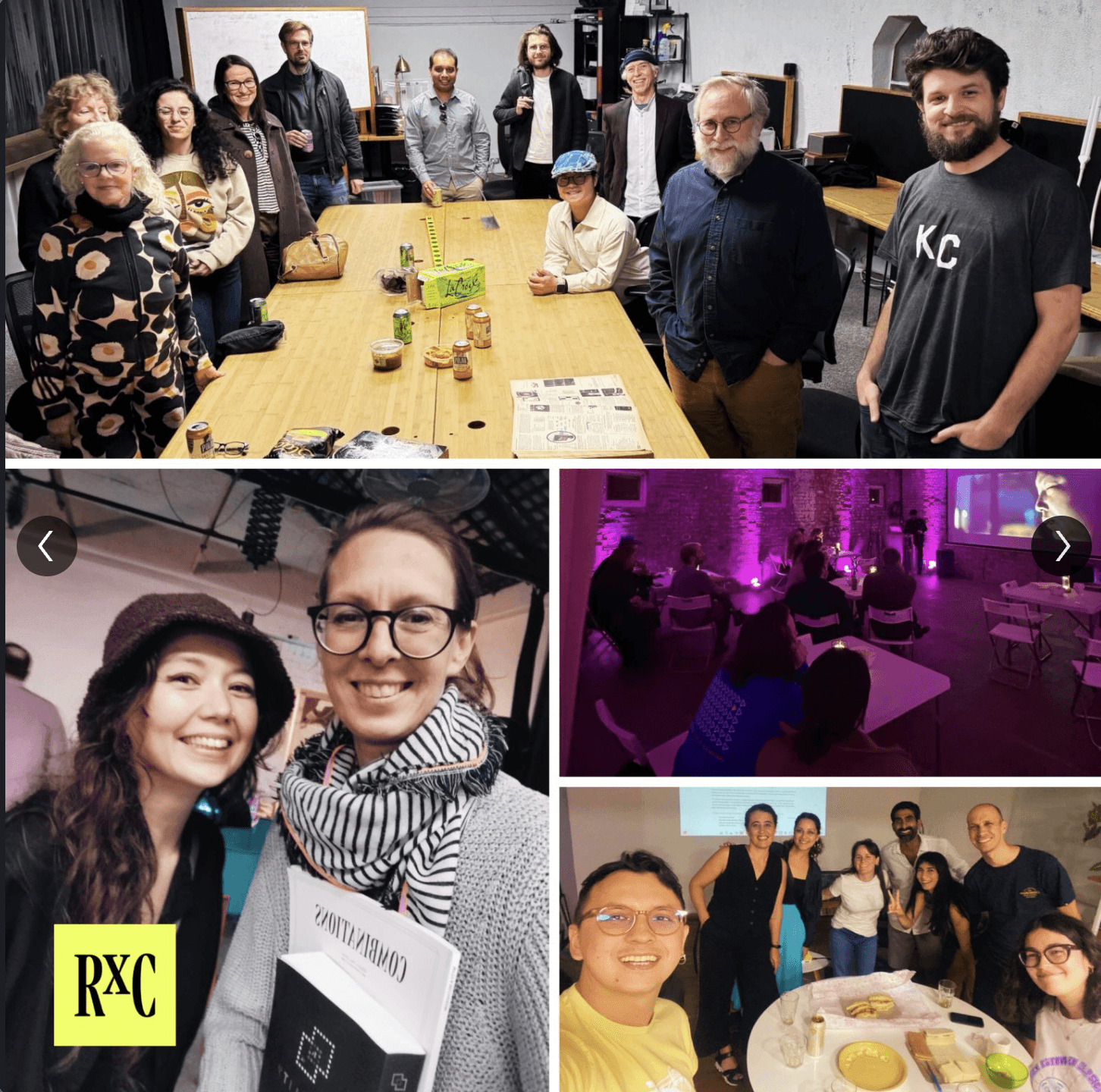
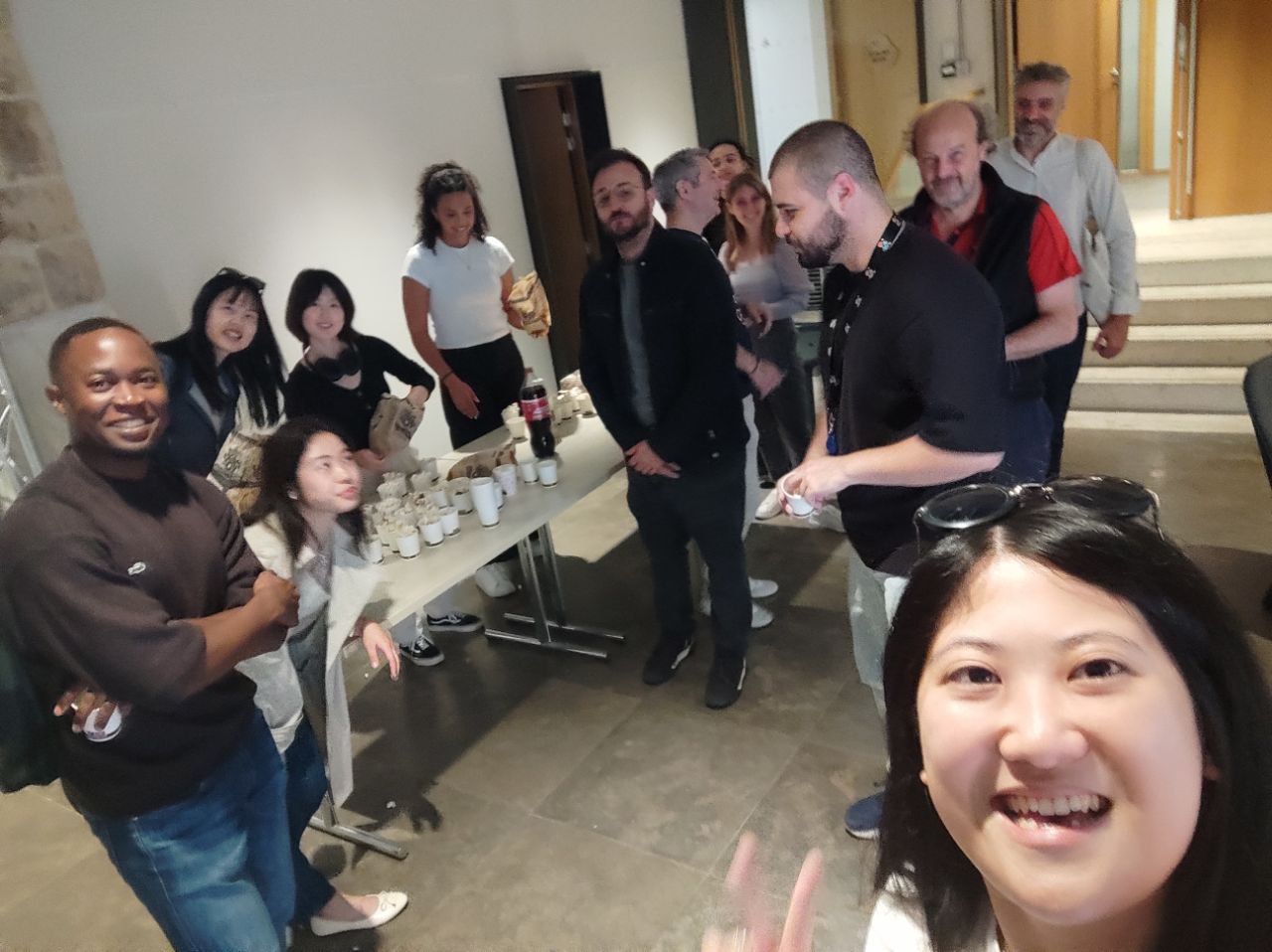
Pilot 001 (April 2025): Twelve locations hosted coordinated screenings alias Watch Parties, and discussions related to the documentary: Good enough Ansecter about Audrey Tang. Statements were aggregated into a Pol.is instance.
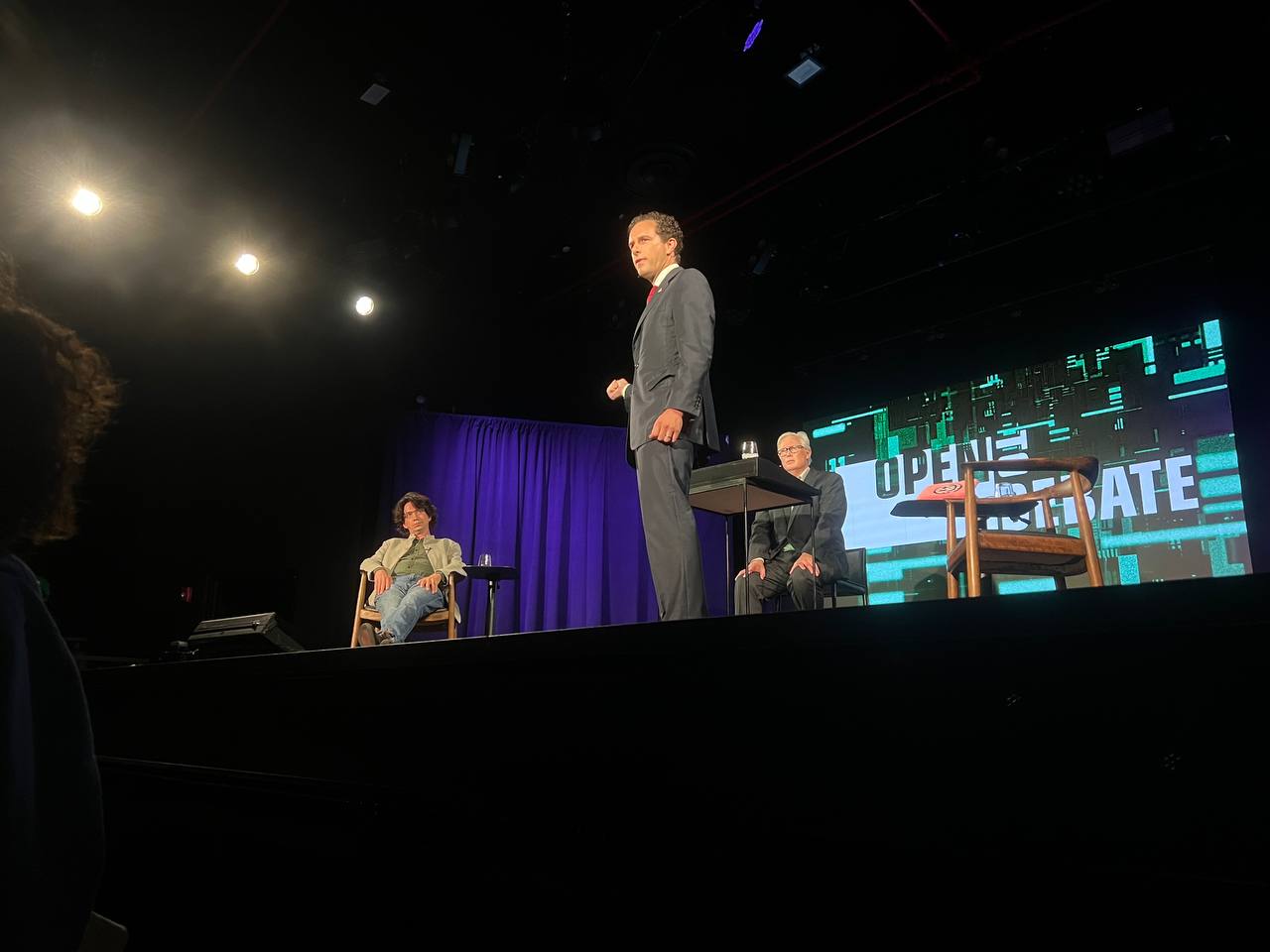
Pilot 002 (September 2025): Seven locations convened global watch parties and discussions around a live debate between Curtis Yarvin and Glenn Weyl. Insights were collected using Context Engine, marking the first broader test of the tool. And Co-written article.
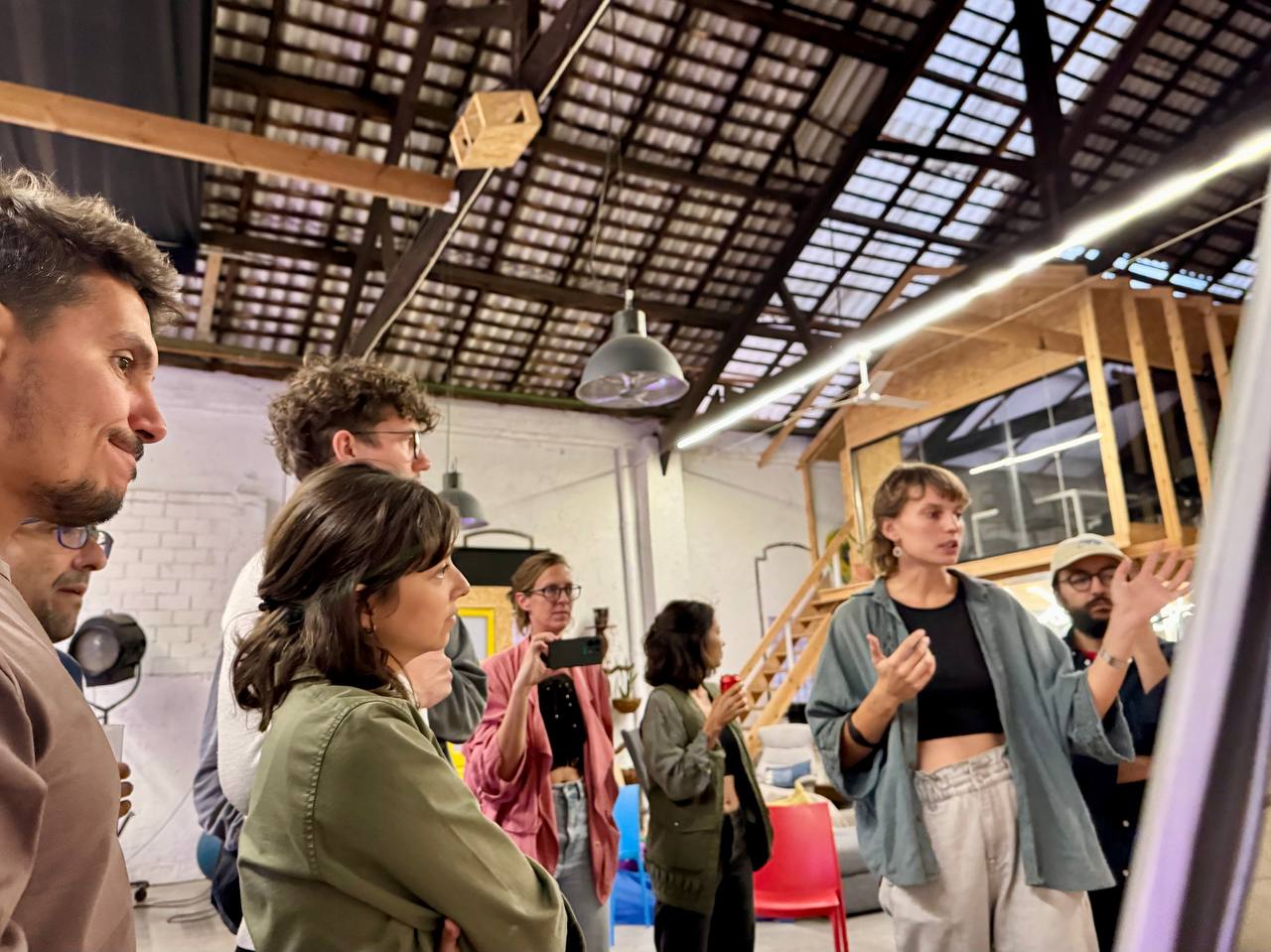
Both pilots confirmed that meaningful, in-person discourse can be enriched—not replaced—by digital participation tools. They also demonstrated that distributed events can generate coherent shared outputs, maintain low barriers to participation, and foster a sense of global community. Challenges in coordination and keep the momentum for meaningful output like a shared article cowritten between the participating Chapters proved a bit difficult, and learnings here are to activate and publish right when the mind is still fresh and there is a drive for engagement right after the event. Also Automation tools like Ai transcription could be used in next editions to make the effort barrier lower to generate a quality output.
Methodology: Local Autonomy, Semi-Synchrony, Shared Tools
Plural Events follow a defined but flexible structure:
One broad topic, explored simultaneously across diverse locations.
Locally unique event formats, including discussions, artistic interventions, watch parties, hackathons, or roleplay-based facilitation.
Semi-synchronous timing, typically within a shared 24–72 hour window.
Open-ended subtopics, allowing each hub to approach the theme from culturally or contextually relevant angles.
A shared digital layer, usually involving Pol.is, AgoraCitizen, or Context Engine, which allows for cross-site knowledge aggregation, and is built with the same shared values that Plurality embraces.
This model preserves the richness of face-to-face deliberation while enabling global comparison. It also supports “plural tech” experimentation—testing tools for opinion clustering, narrative mapping, and collective sense-making.
Moving forward, the integration of AI-supported transcription and statement extraction will further reduce friction and make cross-location synthesis more rigorous and scalable.
---
Knowledge Aggregation and Cultural Plurality
Plural Events offer an opportunity to examine how cultural, geographic, and institutional contexts shape attitudes toward governance, identity, economic design, and other complex topics. Event outputs—discussion statements, Pol.is clusters, and qualitative summaries—constitute a form of *distributed ethnography*.
Key benefits include:
Cross-cultural comparative insight: contrasting how the same theme is interpreted by communities in Barcelona, Buenos Aires, Sydney, or Interlaken.
Collective intelligence flows: using computational tools to visualize patterns of agreement, disagreement, and emergent consensus.
Connected Physical Spaces: that provide the right culture for freedom of thought and plural discussions
Distributed legitimacy: grounding discussions in lived community knowledge rather than in digital-only forums.
Community empowerment: enabling smaller or under-resourced hubs to participate in global dialogues on equal footing.
Event organizers efficiency: Lower the boundary for event organizers to set up their own meetup.
---
Plural Sponsorship: A New Economic Model for Deliberative Networks
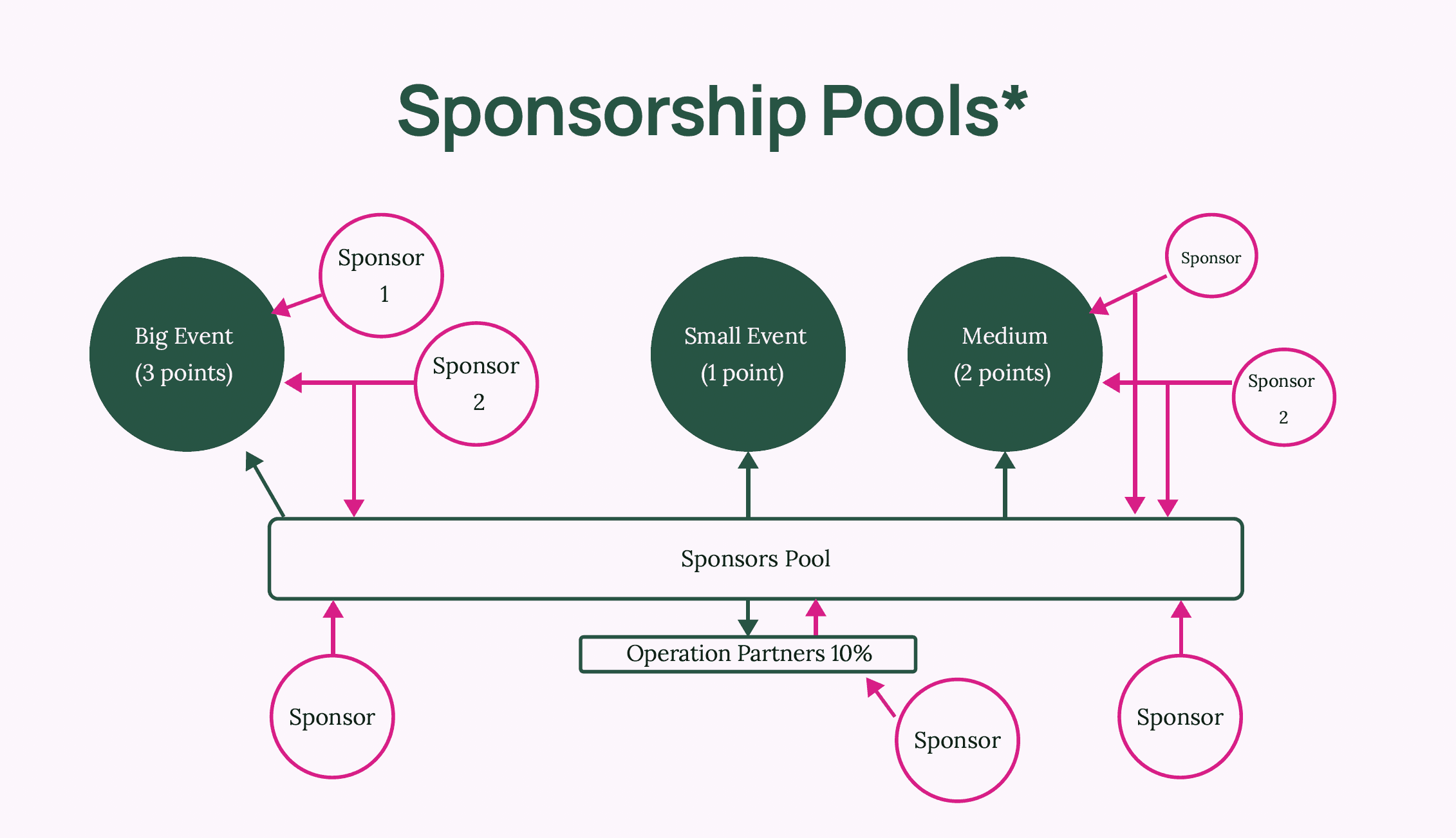
Plural Events also introduce a novel sponsorship architecture: the sponsor pool model. Instead of one lead sponsor, multiple sponsors contribute, and each must be approved by local event organizers.
This mechanism:
preserves local autonomy,
aligns economic support with community values,
gives sponsors insight into which communities resonate with their work,
and ensures plurality even in the funding structure.
The model is especially relevant for discussions on controversial topics—such as Network States—where single-source funding could skew perception or introduce undue influence. For this same reason we have distributed funding over more platforms with a more distributed crowdfunding models like Giveth and funding that is a “reward” to projects that are transparent and open-source. Pensieve.ecf
Integration With Larger Conferences
A longer term aim of Plural Events is to build bridges between grassroots deliberation and major global conferences. The model supports:
Pre-conference input: distributed events occur 2–4 weeks before a major gathering, feeding diverse insights into keynote talks or panel sessions.
Inclusive representation: communities unable to attend due to economic or visa constraints gain indirect presence on global stages.
Post-conference engagement: hubs continue the conversation locally, enabling iterative knowledge cycles. And the digital tools used will remain active so gathering opinions even after the event.
This prefiguration of conference content mirrors models used by organizations such as the Social Enterprise World Forum, that have a structure called: Community Hubs that create events in other locations during the main conference, that will assist the talks interact with sending questions and have their own workshops. Although Plural Events is similar, we emphasize open-ended formats and non-hierarchical and unbranded participation, allowing each hub to design their own process. And see the richness of unique communities in the hubs as a huge asset to ensure non central biased thoughts coming from a overhauling organization.
---
Looking Forward: The December 2025 Edition
The third Plural Event, scheduled for December 2025, focuses on a critical question:
Network State or Network Society?
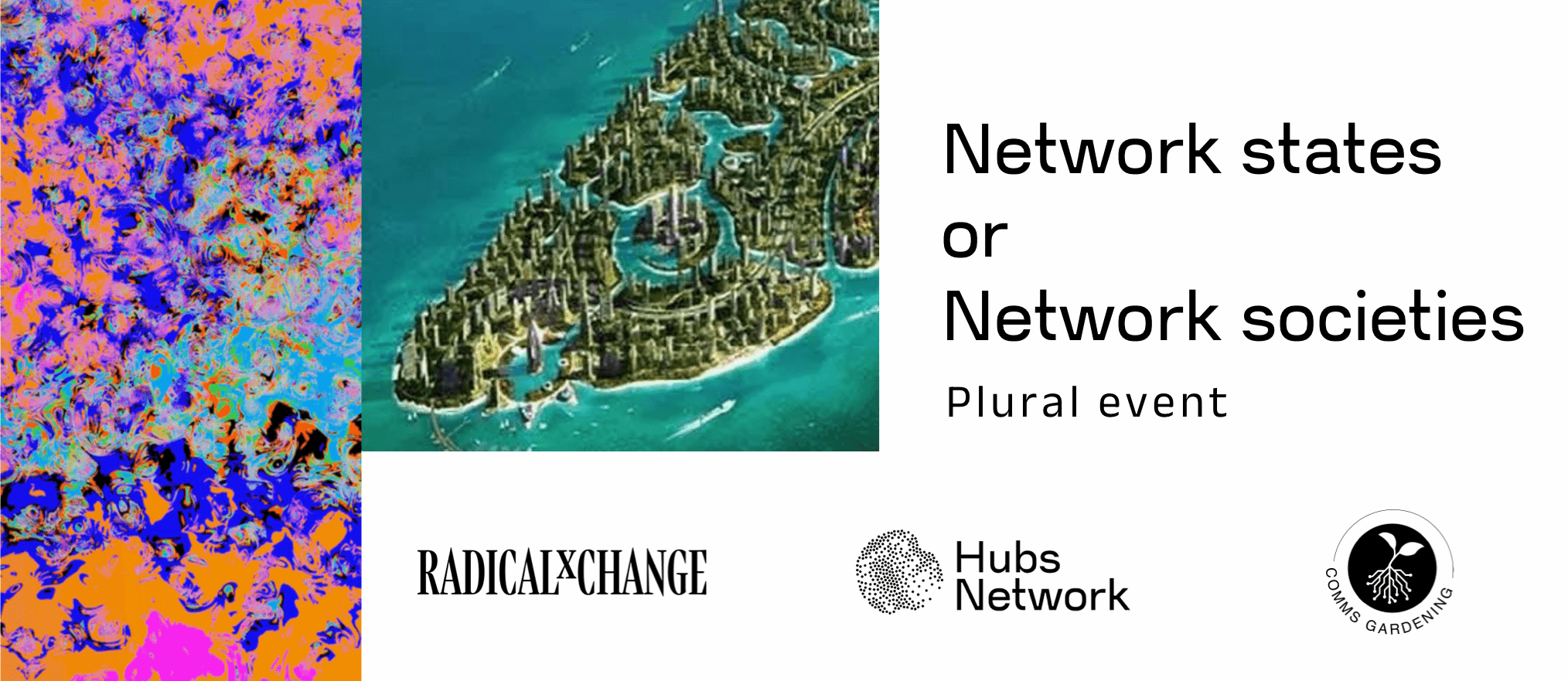
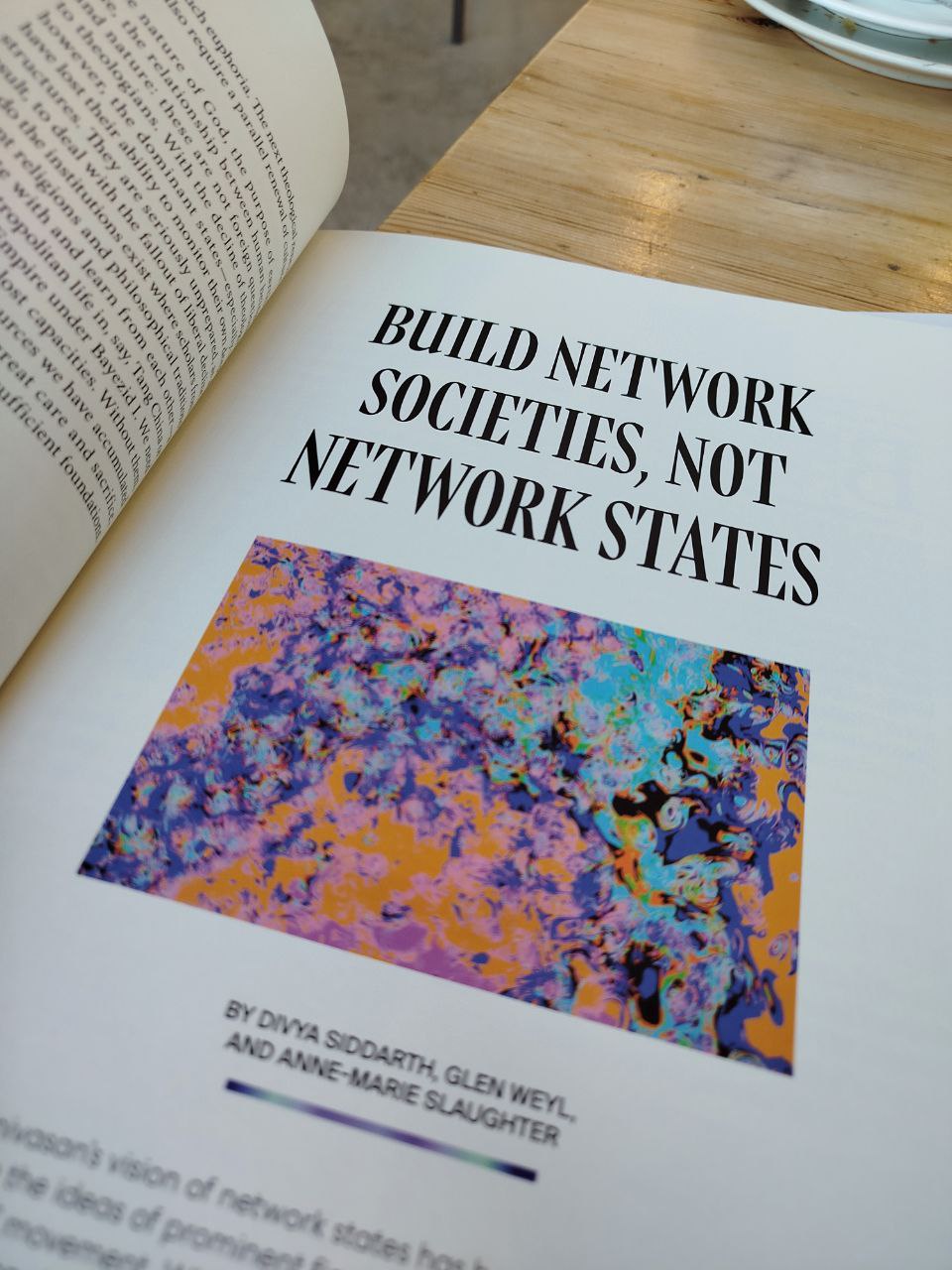
Participation is expected across hubs in Barcelona, Berlin, Rome, Amsterdam, Viena, and others, each exploring governance and coordination models and questioning existing narratives. One article published by combinationsmag: Build Network Societies, Not Network States. illustrates the set out question to discuss. And a rich database of knowledge has ben prepared by Community Gardening to warm up the discussions. Outputs will again be synthesized using plural tech tools, contributing to a wider body of research on alternative societal architectures.
Conclusion: Toward a Plural Infrastructure for Collective Meaning-Making
Plural Events represent an emergent infrastructure for distributed deliberation—one that is at once lightweight, scalable, and deeply human-centered. By combining local autonomy, semi-synchronous global participation, and shared digital tools, this model expands the capacity for cross-cultural understanding and collective intelligence.
As narratives become increasingly polarized, and as communication ecosystems fragment, Plural Events offer a pathway to reconstituting the public sphere as a networked, plural, and participatory environment. They do not prescribe consensus; instead, they cultivate the conditions under which consensus, dissensus, and complexity can be held constructively.
Looking forward, continued refinement in facilitation, sponsorship plurality, and knowledge aggregation tools will strengthen this emerging practice. In doing so, Plural Events contribute not only to the improvement of deliberative processes, but to the wider project of building societies capable of learning, adapting, and evolving together.
---
Please get in touch if you are interested to participate, sponsor or simply have some ideas..
Organized by:

Nov 24, 2025
Plural Events: Toward a Distributed Infrastructure for Networked Deliberation
The accelerating complexity of contemporary social challenges has renewed interest in methodologies that support diverse forms of participation, enable constructive disagreement, and enhance the collective production of knowledge.
Plural Events
The accelerating complexity of contemporary social challenges has renewed interest in methodologies that support diverse forms of participation, enable constructive disagreement, and enhance the collective production of knowledge. In this context, *Plural Events* represent an emerging model for distributed, semi-synchronous deliberation across geographically dispersed communities. Designed in collaboration with the Hubs Network, RadicalxChange chapters, and practitioners of community knowledge architectures: Community Gardening and open source software devlopers. Plural Events operationalize the concept of “plurality” articulated by Audrey Tang and collaborators, extending it into a replicable event-based framework.
This article examines the rationale, structure, and future trajectory of the Plural Events model, highlighting its potential contributions to participatory governance, global dialogue, and the cultivation of cross-cultural insight.
Conceptual Foundations
Plural Events draw on three intellectual traditions:
1. Plurality Theory – emphasizing interoperable diversity, polycentric coordination, and the constructive use of difference.
2. RadicalxChange Principles – which center on equitable participation, the productive tension of conflicting views, and the use of social technologies to surface and compare perspectives.
3. Community-Based Knowledge Infrastructures – informed by network weaving, community gardening practices, and knowledge-mapping methodologies.
Together, these traditions provide a foundation for a model of deliberation that is decentralized, and interwoven. Plural Events aim to maintain local autonomy and the magic that happens in In Real Life discussions, while enabling global comparison and synthesis—a form of “networked plurality.”
---
From Prototype to Framework
The initiative began as a series of decentralized experiments, later formalized under the name *Plural Events*. The Hubs Network—an alliance of physical spaces committed to civic imagination and societal innovation—played a central role in shaping the model, together with Charles Blass and RadicalxChange chapters across Europe and beyond.
Two pilot editions in 2025 demonstrated the feasibility of semi-synchronous, multi-location deliberation:
Pilot 001 (April 2025): Twelve locations hosted coordinated screenings alias Watch Parties, and discussions related to the documentary: Good enough Ansecter about Audrey Tang. Statements were aggregated into a Pol.is instance.
Pilot 002 (September 2025): Seven locations convened global watch parties and discussions around a live debate between Curtis Yarvin and Glenn Weyl. Insights were collected using Context Engine, marking the first broader test of the tool. And Co-written article.
Both pilots confirmed that meaningful, in-person discourse can be enriched—not replaced—by digital participation tools. They also demonstrated that distributed events can generate coherent shared outputs, maintain low barriers to participation, and foster a sense of global community. Challenges in coordination and keep the momentum for meaningful output like a shared article cowritten between the participating Chapters proved a bit difficult, and learnings here are to activate and publish right when the mind is still fresh and there is a drive for engagement right after the event. Also Automation tools like Ai transcription could be used in next editions to make the effort barrier lower to generate a quality output.
Methodology: Local Autonomy, Semi-Synchrony, Shared Tools
Plural Events follow a defined but flexible structure:
One broad topic, explored simultaneously across diverse locations.
Locally unique event formats, including discussions, artistic interventions, watch parties, hackathons, or roleplay-based facilitation.
Semi-synchronous timing, typically within a shared 24–72 hour window.
Open-ended subtopics, allowing each hub to approach the theme from culturally or contextually relevant angles.
A shared digital layer, usually involving Pol.is, AgoraCitizen, or Context Engine, which allows for cross-site knowledge aggregation, and is built with the same shared values that Plurality embraces.
This model preserves the richness of face-to-face deliberation while enabling global comparison. It also supports “plural tech” experimentation—testing tools for opinion clustering, narrative mapping, and collective sense-making.
Moving forward, the integration of AI-supported transcription and statement extraction will further reduce friction and make cross-location synthesis more rigorous and scalable.
---
Knowledge Aggregation and Cultural Plurality
Plural Events offer an opportunity to examine how cultural, geographic, and institutional contexts shape attitudes toward governance, identity, economic design, and other complex topics. Event outputs—discussion statements, Pol.is clusters, and qualitative summaries—constitute a form of *distributed ethnography*.
Key benefits include:
Cross-cultural comparative insight: contrasting how the same theme is interpreted by communities in Barcelona, Buenos Aires, Sydney, or Interlaken.
Collective intelligence flows: using computational tools to visualize patterns of agreement, disagreement, and emergent consensus.
Connected Physical Spaces: that provide the right culture for freedom of thought and plural discussions
Distributed legitimacy: grounding discussions in lived community knowledge rather than in digital-only forums.
Community empowerment: enabling smaller or under-resourced hubs to participate in global dialogues on equal footing.
Event organizers efficiency: Lower the boundary for event organizers to set up their own meetup.
---
Plural Sponsorship: A New Economic Model for Deliberative Networks
Plural Events also introduce a novel sponsorship architecture: the sponsor pool model. Instead of one lead sponsor, multiple sponsors contribute, and each must be approved by local event organizers.
This mechanism:
preserves local autonomy,
aligns economic support with community values,
gives sponsors insight into which communities resonate with their work,
and ensures plurality even in the funding structure.
The model is especially relevant for discussions on controversial topics—such as Network States—where single-source funding could skew perception or introduce undue influence. For this same reason we have distributed funding over more platforms with a more distributed crowdfunding models like Giveth and funding that is a “reward” to projects that are transparent and open-source. Pensieve.ecf
Integration With Larger Conferences
A longer term aim of Plural Events is to build bridges between grassroots deliberation and major global conferences. The model supports:
Pre-conference input: distributed events occur 2–4 weeks before a major gathering, feeding diverse insights into keynote talks or panel sessions.
Inclusive representation: communities unable to attend due to economic or visa constraints gain indirect presence on global stages.
Post-conference engagement: hubs continue the conversation locally, enabling iterative knowledge cycles. And the digital tools used will remain active so gathering opinions even after the event.
This prefiguration of conference content mirrors models used by organizations such as the Social Enterprise World Forum, that have a structure called: Community Hubs that create events in other locations during the main conference, that will assist the talks interact with sending questions and have their own workshops. Although Plural Events is similar, we emphasize open-ended formats and non-hierarchical and unbranded participation, allowing each hub to design their own process. And see the richness of unique communities in the hubs as a huge asset to ensure non central biased thoughts coming from a overhauling organization.
---
Looking Forward: The December 2025 Edition
The third Plural Event, scheduled for December 2025, focuses on a critical question:
Network State or Network Society?
Participation is expected across hubs in Barcelona, Berlin, Rome, Amsterdam, Viena, and others, each exploring governance and coordination models and questioning existing narratives. One article published by combinationsmag: Build Network Societies, Not Network States. illustrates the set out question to discuss. And a rich database of knowledge has ben prepared by Community Gardening to warm up the discussions. Outputs will again be synthesized using plural tech tools, contributing to a wider body of research on alternative societal architectures.
Conclusion: Toward a Plural Infrastructure for Collective Meaning-Making
Plural Events represent an emergent infrastructure for distributed deliberation—one that is at once lightweight, scalable, and deeply human-centered. By combining local autonomy, semi-synchronous global participation, and shared digital tools, this model expands the capacity for cross-cultural understanding and collective intelligence.
As narratives become increasingly polarized, and as communication ecosystems fragment, Plural Events offer a pathway to reconstituting the public sphere as a networked, plural, and participatory environment. They do not prescribe consensus; instead, they cultivate the conditions under which consensus, dissensus, and complexity can be held constructively.
Looking forward, continued refinement in facilitation, sponsorship plurality, and knowledge aggregation tools will strengthen this emerging practice. In doing so, Plural Events contribute not only to the improvement of deliberative processes, but to the wider project of building societies capable of learning, adapting, and evolving together.
---
Please get in touch if you are interested to participate, sponsor or simply have some ideas..
Organized by:
Nov 24, 2025
Plural Events: Toward a Distributed Infrastructure for Networked Deliberation
The accelerating complexity of contemporary social challenges has renewed interest in methodologies that support diverse forms of participation, enable constructive disagreement, and enhance the collective production of knowledge.
Plural Events
The accelerating complexity of contemporary social challenges has renewed interest in methodologies that support diverse forms of participation, enable constructive disagreement, and enhance the collective production of knowledge. In this context, *Plural Events* represent an emerging model for distributed, semi-synchronous deliberation across geographically dispersed communities. Designed in collaboration with the Hubs Network, RadicalxChange chapters, and practitioners of community knowledge architectures: Community Gardening and open source software devlopers. Plural Events operationalize the concept of “plurality” articulated by Audrey Tang and collaborators, extending it into a replicable event-based framework.
This article examines the rationale, structure, and future trajectory of the Plural Events model, highlighting its potential contributions to participatory governance, global dialogue, and the cultivation of cross-cultural insight.
Conceptual Foundations
Plural Events draw on three intellectual traditions:
1. Plurality Theory – emphasizing interoperable diversity, polycentric coordination, and the constructive use of difference.
2. RadicalxChange Principles – which center on equitable participation, the productive tension of conflicting views, and the use of social technologies to surface and compare perspectives.
3. Community-Based Knowledge Infrastructures – informed by network weaving, community gardening practices, and knowledge-mapping methodologies.
Together, these traditions provide a foundation for a model of deliberation that is decentralized, and interwoven. Plural Events aim to maintain local autonomy and the magic that happens in In Real Life discussions, while enabling global comparison and synthesis—a form of “networked plurality.”
---
From Prototype to Framework
The initiative began as a series of decentralized experiments, later formalized under the name *Plural Events*. The Hubs Network—an alliance of physical spaces committed to civic imagination and societal innovation—played a central role in shaping the model, together with Charles Blass and RadicalxChange chapters across Europe and beyond.
Two pilot editions in 2025 demonstrated the feasibility of semi-synchronous, multi-location deliberation:
Pilot 001 (April 2025): Twelve locations hosted coordinated screenings alias Watch Parties, and discussions related to the documentary: Good enough Ansecter about Audrey Tang. Statements were aggregated into a Pol.is instance.
Pilot 002 (September 2025): Seven locations convened global watch parties and discussions around a live debate between Curtis Yarvin and Glenn Weyl. Insights were collected using Context Engine, marking the first broader test of the tool. And Co-written article.
Both pilots confirmed that meaningful, in-person discourse can be enriched—not replaced—by digital participation tools. They also demonstrated that distributed events can generate coherent shared outputs, maintain low barriers to participation, and foster a sense of global community. Challenges in coordination and keep the momentum for meaningful output like a shared article cowritten between the participating Chapters proved a bit difficult, and learnings here are to activate and publish right when the mind is still fresh and there is a drive for engagement right after the event. Also Automation tools like Ai transcription could be used in next editions to make the effort barrier lower to generate a quality output.
Methodology: Local Autonomy, Semi-Synchrony, Shared Tools
Plural Events follow a defined but flexible structure:
One broad topic, explored simultaneously across diverse locations.
Locally unique event formats, including discussions, artistic interventions, watch parties, hackathons, or roleplay-based facilitation.
Semi-synchronous timing, typically within a shared 24–72 hour window.
Open-ended subtopics, allowing each hub to approach the theme from culturally or contextually relevant angles.
A shared digital layer, usually involving Pol.is, AgoraCitizen, or Context Engine, which allows for cross-site knowledge aggregation, and is built with the same shared values that Plurality embraces.
This model preserves the richness of face-to-face deliberation while enabling global comparison. It also supports “plural tech” experimentation—testing tools for opinion clustering, narrative mapping, and collective sense-making.
Moving forward, the integration of AI-supported transcription and statement extraction will further reduce friction and make cross-location synthesis more rigorous and scalable.
---
Knowledge Aggregation and Cultural Plurality
Plural Events offer an opportunity to examine how cultural, geographic, and institutional contexts shape attitudes toward governance, identity, economic design, and other complex topics. Event outputs—discussion statements, Pol.is clusters, and qualitative summaries—constitute a form of *distributed ethnography*.
Key benefits include:
Cross-cultural comparative insight: contrasting how the same theme is interpreted by communities in Barcelona, Buenos Aires, Sydney, or Interlaken.
Collective intelligence flows: using computational tools to visualize patterns of agreement, disagreement, and emergent consensus.
Connected Physical Spaces: that provide the right culture for freedom of thought and plural discussions
Distributed legitimacy: grounding discussions in lived community knowledge rather than in digital-only forums.
Community empowerment: enabling smaller or under-resourced hubs to participate in global dialogues on equal footing.
Event organizers efficiency: Lower the boundary for event organizers to set up their own meetup.
---
Plural Sponsorship: A New Economic Model for Deliberative Networks
Plural Events also introduce a novel sponsorship architecture: the sponsor pool model. Instead of one lead sponsor, multiple sponsors contribute, and each must be approved by local event organizers.
This mechanism:
preserves local autonomy,
aligns economic support with community values,
gives sponsors insight into which communities resonate with their work,
and ensures plurality even in the funding structure.
The model is especially relevant for discussions on controversial topics—such as Network States—where single-source funding could skew perception or introduce undue influence. For this same reason we have distributed funding over more platforms with a more distributed crowdfunding models like Giveth and funding that is a “reward” to projects that are transparent and open-source. Pensieve.ecf
Integration With Larger Conferences
A longer term aim of Plural Events is to build bridges between grassroots deliberation and major global conferences. The model supports:
Pre-conference input: distributed events occur 2–4 weeks before a major gathering, feeding diverse insights into keynote talks or panel sessions.
Inclusive representation: communities unable to attend due to economic or visa constraints gain indirect presence on global stages.
Post-conference engagement: hubs continue the conversation locally, enabling iterative knowledge cycles. And the digital tools used will remain active so gathering opinions even after the event.
This prefiguration of conference content mirrors models used by organizations such as the Social Enterprise World Forum, that have a structure called: Community Hubs that create events in other locations during the main conference, that will assist the talks interact with sending questions and have their own workshops. Although Plural Events is similar, we emphasize open-ended formats and non-hierarchical and unbranded participation, allowing each hub to design their own process. And see the richness of unique communities in the hubs as a huge asset to ensure non central biased thoughts coming from a overhauling organization.
---
Looking Forward: The December 2025 Edition
The third Plural Event, scheduled for December 2025, focuses on a critical question:
Network State or Network Society?
Participation is expected across hubs in Barcelona, Berlin, Rome, Amsterdam, Viena, and others, each exploring governance and coordination models and questioning existing narratives. One article published by combinationsmag: Build Network Societies, Not Network States. illustrates the set out question to discuss. And a rich database of knowledge has ben prepared by Community Gardening to warm up the discussions. Outputs will again be synthesized using plural tech tools, contributing to a wider body of research on alternative societal architectures.
Conclusion: Toward a Plural Infrastructure for Collective Meaning-Making
Plural Events represent an emergent infrastructure for distributed deliberation—one that is at once lightweight, scalable, and deeply human-centered. By combining local autonomy, semi-synchronous global participation, and shared digital tools, this model expands the capacity for cross-cultural understanding and collective intelligence.
As narratives become increasingly polarized, and as communication ecosystems fragment, Plural Events offer a pathway to reconstituting the public sphere as a networked, plural, and participatory environment. They do not prescribe consensus; instead, they cultivate the conditions under which consensus, dissensus, and complexity can be held constructively.
Looking forward, continued refinement in facilitation, sponsorship plurality, and knowledge aggregation tools will strengthen this emerging practice. In doing so, Plural Events contribute not only to the improvement of deliberative processes, but to the wider project of building societies capable of learning, adapting, and evolving together.
---
Please get in touch if you are interested to participate, sponsor or simply have some ideas..
Organized by: