Sep 26, 2025
Soft-Launch @AKASHA Hub
Launching the Hubs Network at Akasha Hub 🌍
Milestones
Launch for Akasha Hub
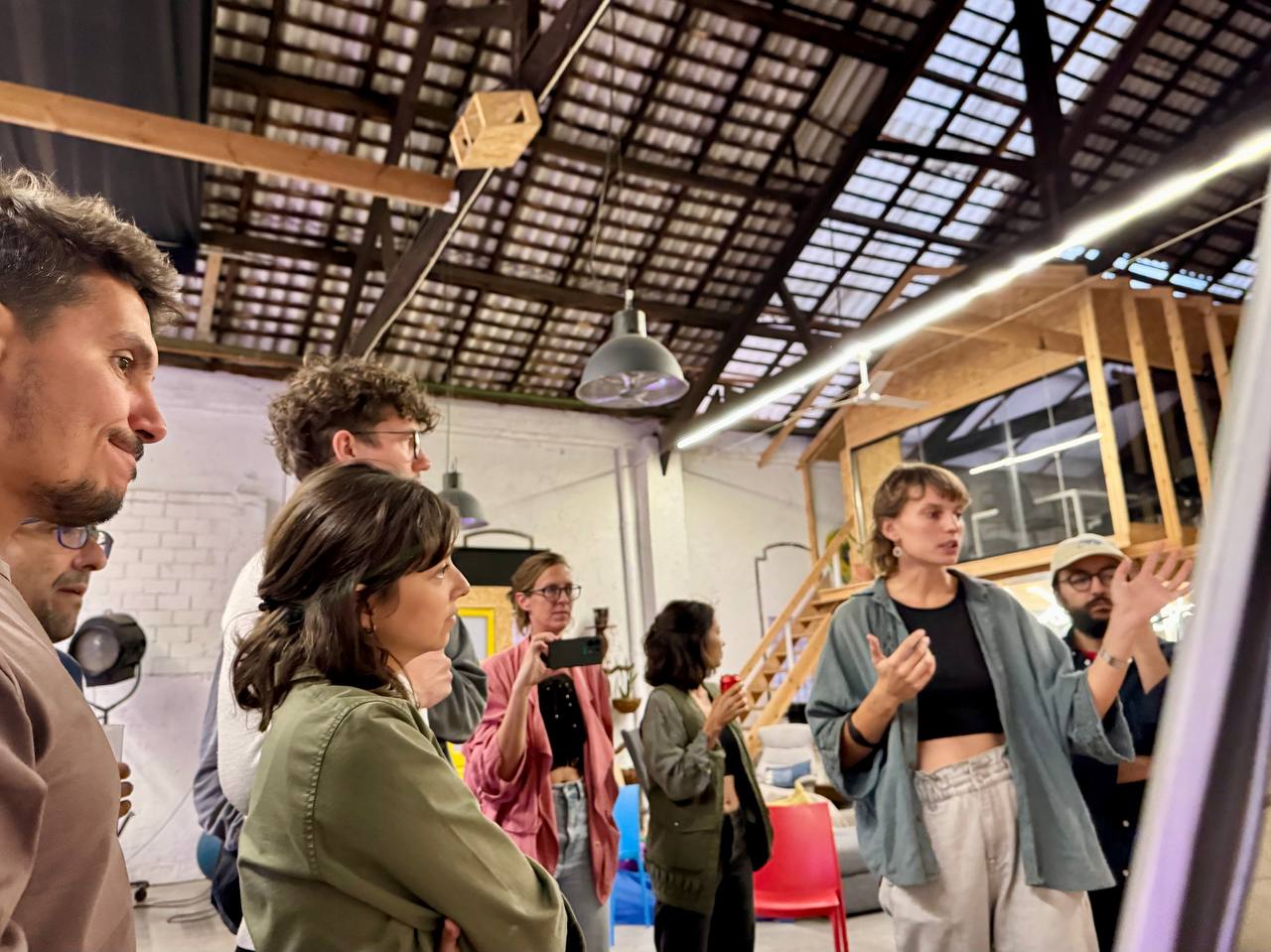
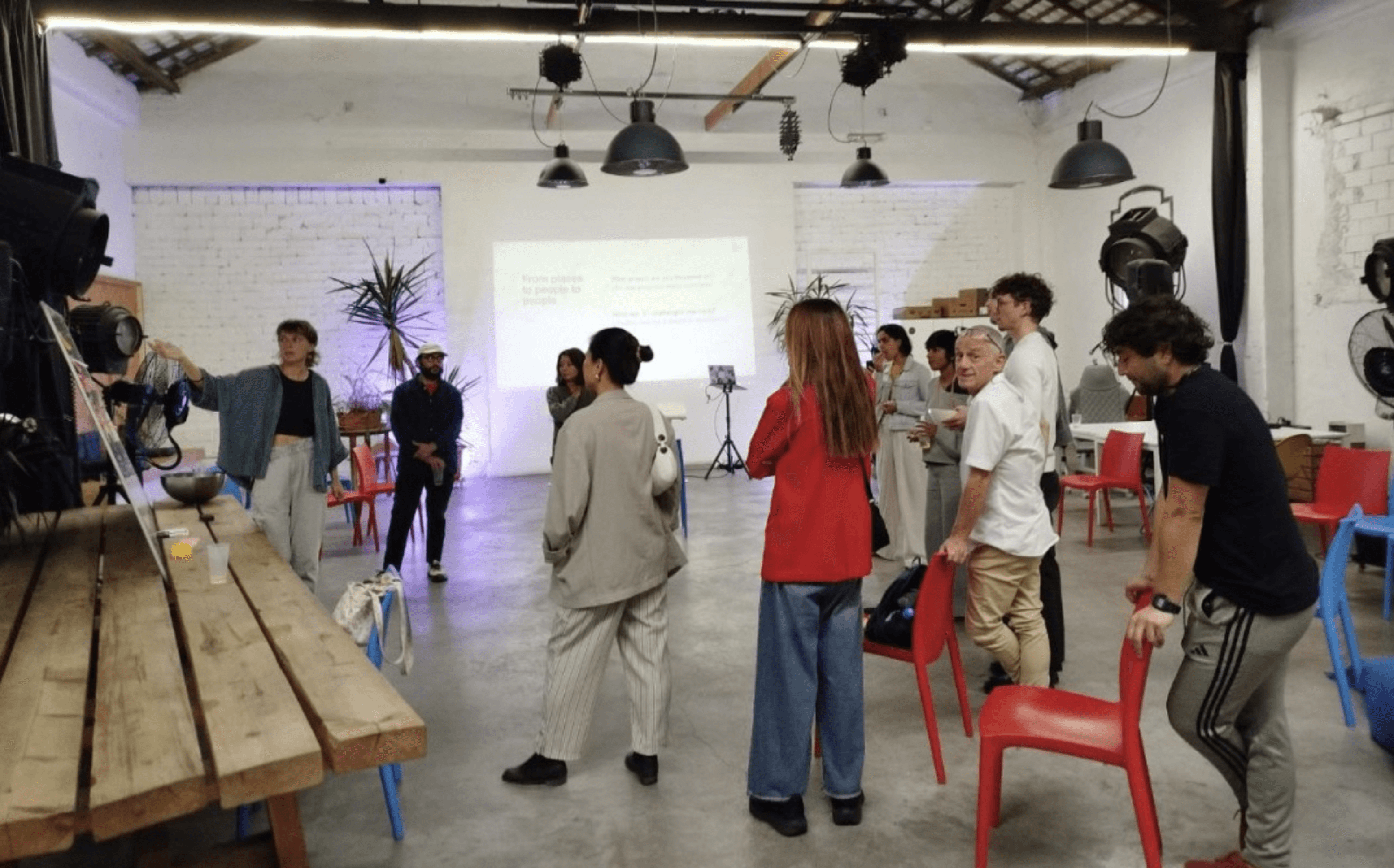
Last week, I had the joy of facilitating a collective ideation and participatory research session during the soft launch of the Hubs Network at AKASHA Hub Barcelona.
We brought together 14 local impact projects and a wonderfully international crowd to explore
🔹 The key systemic challenges our initiatives face
🔹 Pathways for collaboration and resource sharing
🔹 Emerging trends shaping the future of impact ecosystems
From financial sustainability and transparent collaboration models, to bridging digital divides and bridging local impact with international connections — the conversation revealed both the pain points and the immense creativity already alive in our community.
What inspired me most was the willingness of participants to share their skills, networks, and experience so openly. The session showed that a Hubs Network can become much more than just a meeting point — it can be a shared infrastructure for funding intelligence, skill exchange, and visibility.
✨ On a personal note, I’m also excited to announce that I’ve joined the Hubs Network team. I’m grateful to be working alongside a group of incredibly smart, experienced, and purpose-driven people who are shaping what collective impact can look like.
@Justina
We share with you here the presentation slides and the conclusions of the participatory session.
Pilot Collective Ideation Session
Akasha Hub – Soft Launch of the Hubs Network
Date & Venue: Akasha Hub, 26/09/2025
Prepared by: Justina Svitraite
1. Introduction
This pilot collective ideation session was convened to explore the potential of a Hubs Network: an emerging alliance of impact-oriented initiatives.
The event gathered a diverse group of project owners and collaborators to map common challenges, surface opportunities for mutual support, and test collective ideation methods.
Innovation
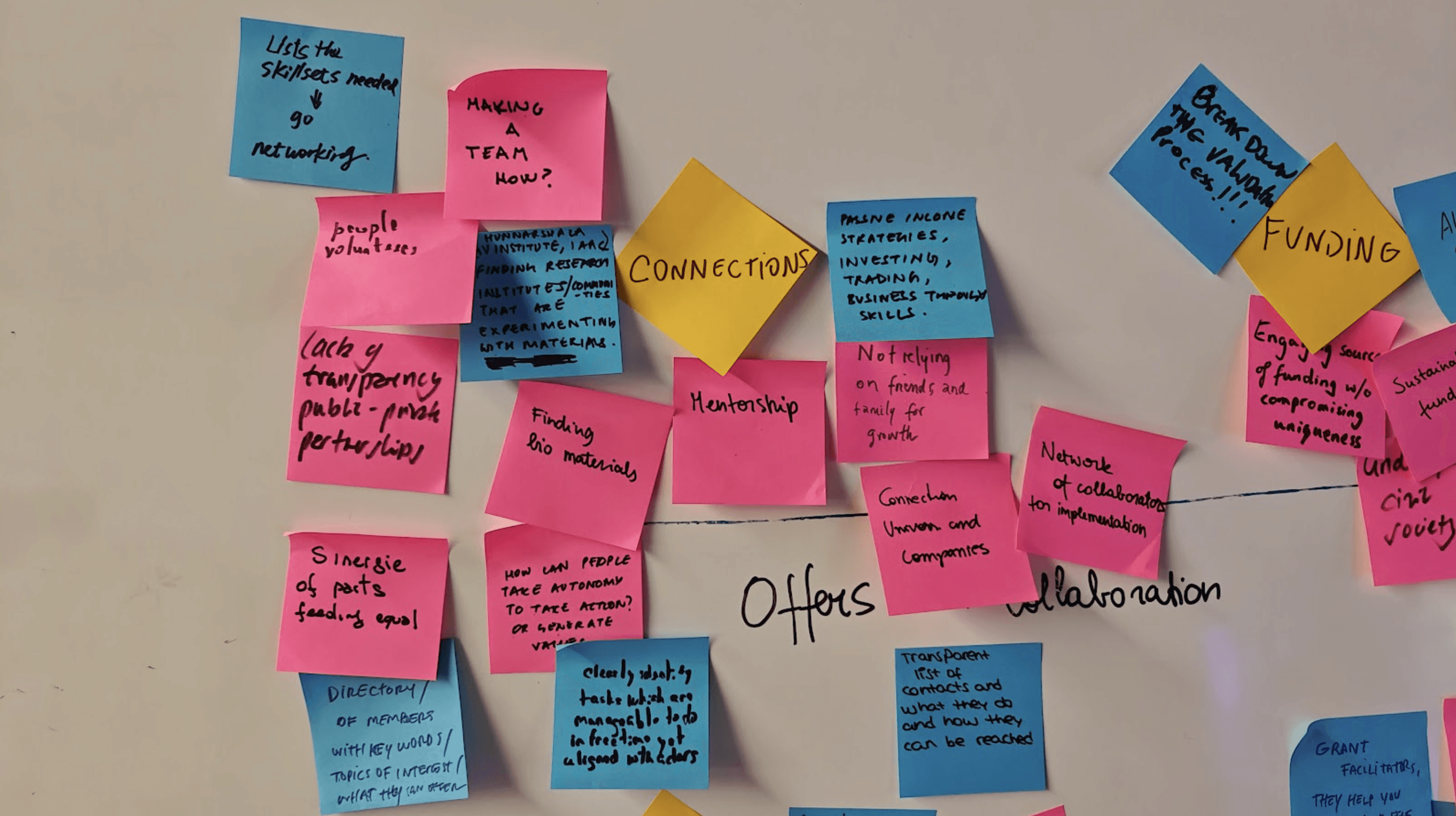
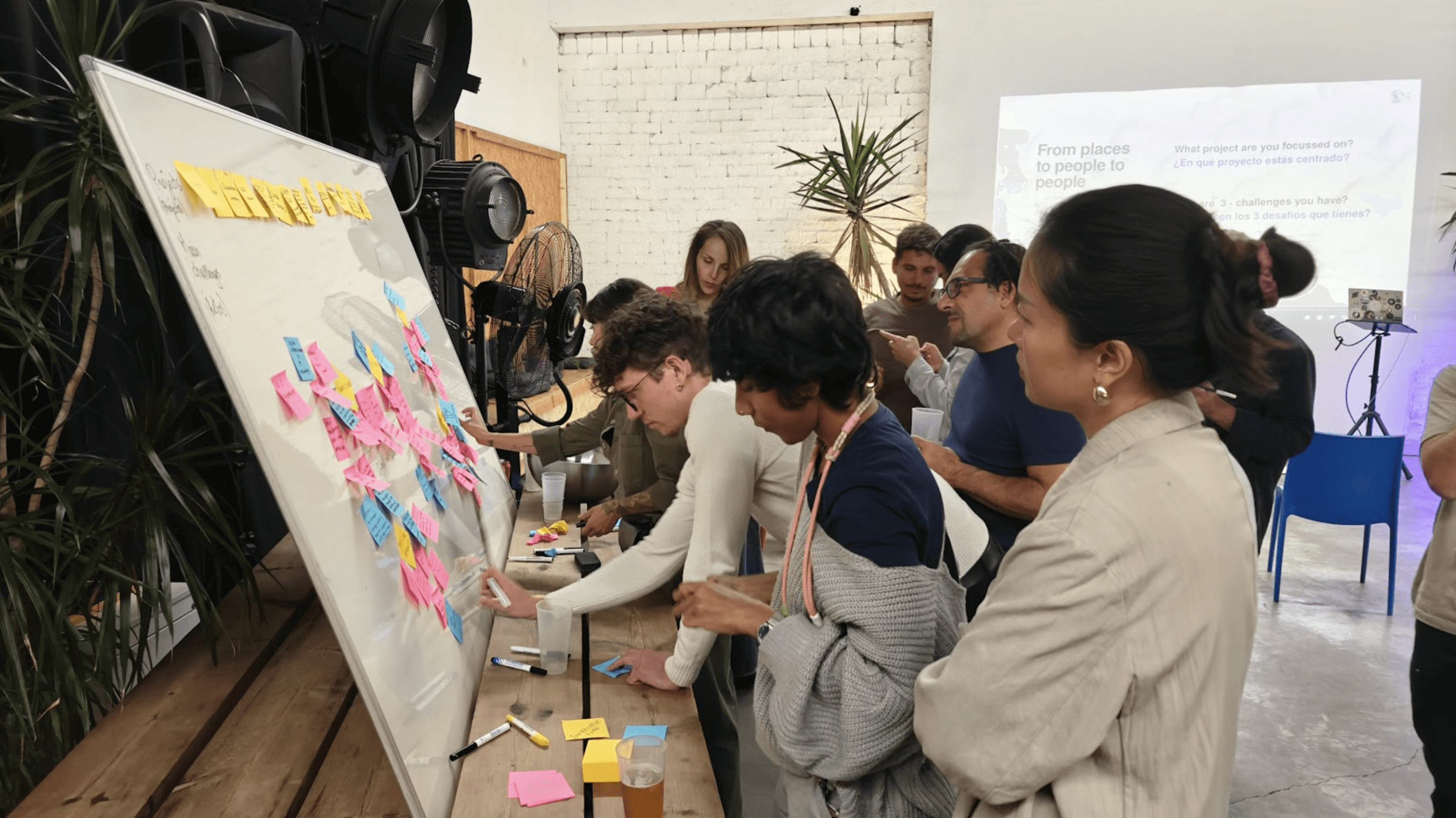
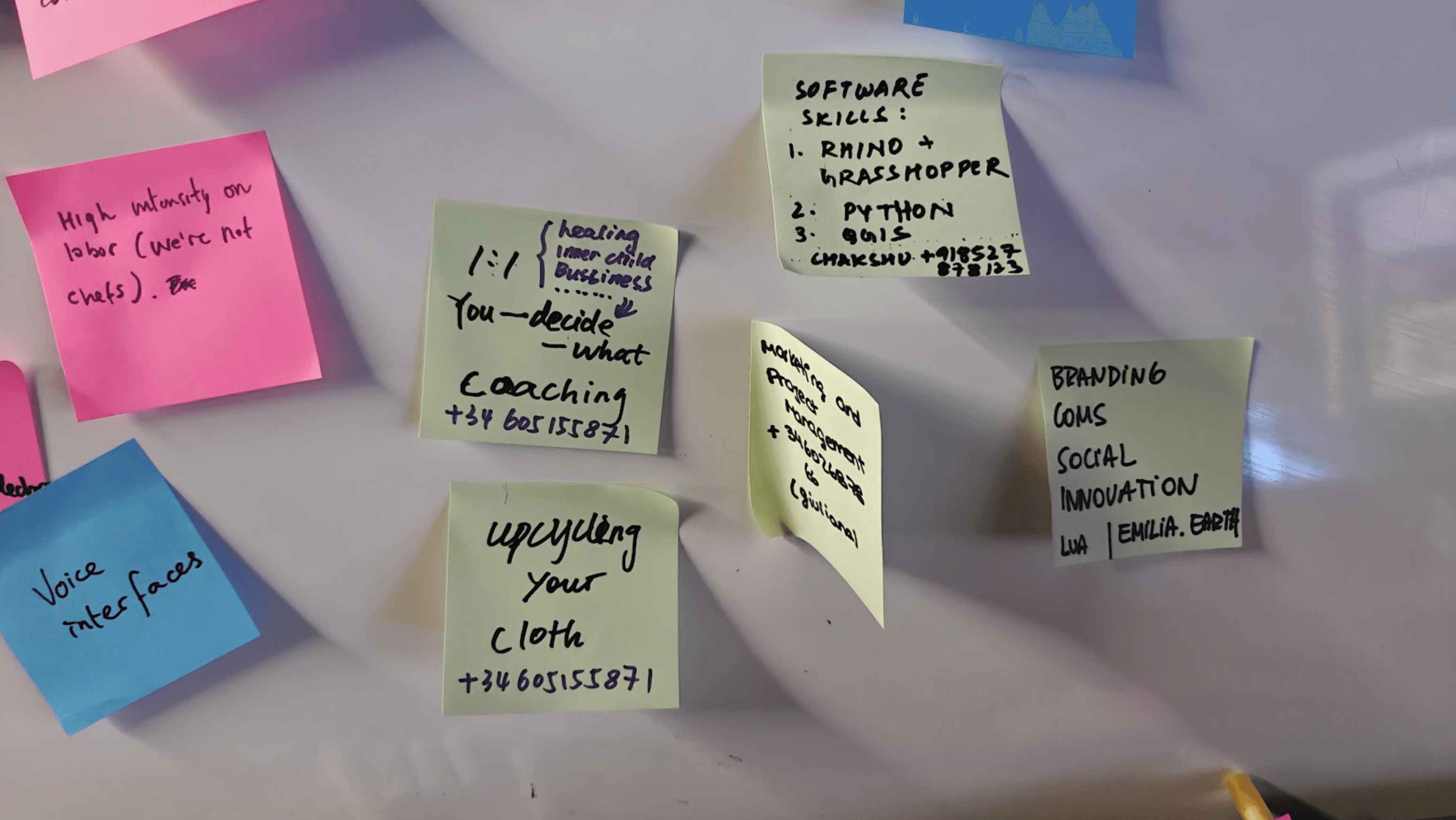
The findings below synthesise the post-it notes produced during the workshop.
Colours were used to classify inputs:
Yellow: participating organisations or projects
Pink: challenges and pain points
Blue: proposed solutions
Green: offers of skills or resources for collaboration
This report translates the raw data into key insights and strategic recommendations for the network’s next steps.
2. Participating Initiatives
The workshop attracted 14 projects combining in the wide spectrum of fields as social innovation, sustainability, and technology, including:
Catalysts of Resilience – resilient cities under adverse conditions
LUA Studio - visual communication studio
SEKOND FLOW – pre-consumer textile waste management
Mapu Project – platform to give social impact and sustainability more visibility
Mès & Mès – pop-ups for food security
PRISMA (events) - participatory impact documentation
Counting Border Violence
Klimtbeard
101BCN -Light, Plants and AI
Lichen
Phil (Decentralized computing)
Edible Balconies - vertical gardens/composting solutions
Engineering the Future – sustainable software & local design
Joule Labs – connection, expression, experience, expansion
These initiatives span urban resilience, circular economy, community food systems, digital innovation and social justice.
3. Main Challenges Identified
3.1 Funding & Financial Sustainability
Difficulty accessing sustainable funding without compromising mission
Asymmetric distribution of funds
Rent and space costs
Need for grant facilitators and support in EU calls
Limited audience → limited revenue
3.2 Business & Market Development
Lack of clear business models and revenue strategies
Difficulty differentiating from similar projects
Events and offerings not easily scalable
Marketing and communication gaps
3.3 Collaboration & Ecosystem Building
Lack of transparency in public–private partnerships
Difficulty forming teams and finding volunteers
Need for a network of collaborators for implementation
Limited integration with universities and research centres
Need for suitable networking spaces
3.4 Knowledge & Capacity
Digital divide and lack of technical knowledge
High labour intensity (“we’re not chefs”)
Complexity vs. clear communication
3.5 Positioning & Growth
Ambition to become more international while staying locally rooted
Bureaucratic and governmental hurdles
Encouraging individual autonomy to act and generate value
3.6 Technology & Implementation
Question of how to balance analog approaches with appropriate technology
Exclusivity
4. Proposed Solutions
Participants generated a range of potential responses:
Break down the validation process for new ideas
Explore alternative currencies and innovative funding models
Build partnerships and bridge-funding collaborations
Public funding and crowdfunding opportunities
Grant facilitators to guide through EU processes
Deep research into client and stakeholder needs
Engage incubators and markets early (“start talking with everyone”)
Create unique projects combining multiple interests
Educate audiences on the benefits of projects
Provide a basic PR kit for all members
Offer coworking spaces with free or volunteer-based access
Experiment with voice interfaces and other accessible technologies
5. Offers for Collaboration
Several participants expressed willingness to share skills and services across the network, such as:
1:1 coaching (including inner-child healing and business coaching)
Upcycling and textile expertise
Software skills: Rhino + Grasshopper, Python, QGIS
Branding, communications and social innovation strategy
Building prototypes and automations, taking ideas to MVP
Organising food events and conducting design research
These offerings illustrate the latent peer-to-peer capacity that the hubs network could immediately mobilise.
6. Emerging Trends and Insights
Structural Funding Gap
Financial sustainability is the most pressing issue across projectsFrom Idea to Market Fit
Projects need help with business modelling, audience development and clear value propositions.Need for Stronger Inter-hub Connections
The desire for a transparent, trust-based collaboration framework is explicit.Knowledge & Capacity Divide
Digital gaps and high labour intensity show the need for accessible technology and skill sharing.Glocal Ambitions
Participants want to remain rooted in their local communities while gaining international reach.Impact-First Orientation
Socio- ecological mission is a unifying thread.
8. Conclusion
This pilot session successfully surfaced shared challenges, practical solutions and a strong appetite for collaboration.
It demonstrates both the need and the opportunity for a hubs network that goes beyond simple networking:
to become a collective infrastructure for funding intelligence, skill exchange and “glocal” visibility.
The momentum generated in this soft launch provides a foundation for co-creating the network’s next phase with project owners and partners.

Sep 26, 2025
Soft-Launch @AKASHA Hub
Launching the Hubs Network at Akasha Hub 🌍
Milestones
Launch for Akasha Hub
Last week, I had the joy of facilitating a collective ideation and participatory research session during the soft launch of the Hubs Network at AKASHA Hub Barcelona.
We brought together 14 local impact projects and a wonderfully international crowd to explore
🔹 The key systemic challenges our initiatives face
🔹 Pathways for collaboration and resource sharing
🔹 Emerging trends shaping the future of impact ecosystems
From financial sustainability and transparent collaboration models, to bridging digital divides and bridging local impact with international connections — the conversation revealed both the pain points and the immense creativity already alive in our community.
What inspired me most was the willingness of participants to share their skills, networks, and experience so openly. The session showed that a Hubs Network can become much more than just a meeting point — it can be a shared infrastructure for funding intelligence, skill exchange, and visibility.
✨ On a personal note, I’m also excited to announce that I’ve joined the Hubs Network team. I’m grateful to be working alongside a group of incredibly smart, experienced, and purpose-driven people who are shaping what collective impact can look like.
@Justina
We share with you here the presentation slides and the conclusions of the participatory session.
Pilot Collective Ideation Session
Akasha Hub – Soft Launch of the Hubs Network
Date & Venue: Akasha Hub, 26/09/2025
Prepared by: Justina Svitraite
1. Introduction
This pilot collective ideation session was convened to explore the potential of a Hubs Network: an emerging alliance of impact-oriented initiatives.
The event gathered a diverse group of project owners and collaborators to map common challenges, surface opportunities for mutual support, and test collective ideation methods.
Innovation
The findings below synthesise the post-it notes produced during the workshop.
Colours were used to classify inputs:
Yellow: participating organisations or projects
Pink: challenges and pain points
Blue: proposed solutions
Green: offers of skills or resources for collaboration
This report translates the raw data into key insights and strategic recommendations for the network’s next steps.
2. Participating Initiatives
The workshop attracted 14 projects combining in the wide spectrum of fields as social innovation, sustainability, and technology, including:
Catalysts of Resilience – resilient cities under adverse conditions
LUA Studio - visual communication studio
SEKOND FLOW – pre-consumer textile waste management
Mapu Project – platform to give social impact and sustainability more visibility
Mès & Mès – pop-ups for food security
PRISMA (events) - participatory impact documentation
Counting Border Violence
Klimtbeard
101BCN -Light, Plants and AI
Lichen
Phil (Decentralized computing)
Edible Balconies - vertical gardens/composting solutions
Engineering the Future – sustainable software & local design
Joule Labs – connection, expression, experience, expansion
These initiatives span urban resilience, circular economy, community food systems, digital innovation and social justice.
3. Main Challenges Identified
3.1 Funding & Financial Sustainability
Difficulty accessing sustainable funding without compromising mission
Asymmetric distribution of funds
Rent and space costs
Need for grant facilitators and support in EU calls
Limited audience → limited revenue
3.2 Business & Market Development
Lack of clear business models and revenue strategies
Difficulty differentiating from similar projects
Events and offerings not easily scalable
Marketing and communication gaps
3.3 Collaboration & Ecosystem Building
Lack of transparency in public–private partnerships
Difficulty forming teams and finding volunteers
Need for a network of collaborators for implementation
Limited integration with universities and research centres
Need for suitable networking spaces
3.4 Knowledge & Capacity
Digital divide and lack of technical knowledge
High labour intensity (“we’re not chefs”)
Complexity vs. clear communication
3.5 Positioning & Growth
Ambition to become more international while staying locally rooted
Bureaucratic and governmental hurdles
Encouraging individual autonomy to act and generate value
3.6 Technology & Implementation
Question of how to balance analog approaches with appropriate technology
Exclusivity
4. Proposed Solutions
Participants generated a range of potential responses:
Break down the validation process for new ideas
Explore alternative currencies and innovative funding models
Build partnerships and bridge-funding collaborations
Public funding and crowdfunding opportunities
Grant facilitators to guide through EU processes
Deep research into client and stakeholder needs
Engage incubators and markets early (“start talking with everyone”)
Create unique projects combining multiple interests
Educate audiences on the benefits of projects
Provide a basic PR kit for all members
Offer coworking spaces with free or volunteer-based access
Experiment with voice interfaces and other accessible technologies
5. Offers for Collaboration
Several participants expressed willingness to share skills and services across the network, such as:
1:1 coaching (including inner-child healing and business coaching)
Upcycling and textile expertise
Software skills: Rhino + Grasshopper, Python, QGIS
Branding, communications and social innovation strategy
Building prototypes and automations, taking ideas to MVP
Organising food events and conducting design research
These offerings illustrate the latent peer-to-peer capacity that the hubs network could immediately mobilise.
6. Emerging Trends and Insights
Structural Funding Gap
Financial sustainability is the most pressing issue across projectsFrom Idea to Market Fit
Projects need help with business modelling, audience development and clear value propositions.Need for Stronger Inter-hub Connections
The desire for a transparent, trust-based collaboration framework is explicit.Knowledge & Capacity Divide
Digital gaps and high labour intensity show the need for accessible technology and skill sharing.Glocal Ambitions
Participants want to remain rooted in their local communities while gaining international reach.Impact-First Orientation
Socio- ecological mission is a unifying thread.
8. Conclusion
This pilot session successfully surfaced shared challenges, practical solutions and a strong appetite for collaboration.
It demonstrates both the need and the opportunity for a hubs network that goes beyond simple networking:
to become a collective infrastructure for funding intelligence, skill exchange and “glocal” visibility.
The momentum generated in this soft launch provides a foundation for co-creating the network’s next phase with project owners and partners.
Sep 26, 2025
Soft-Launch @AKASHA Hub
Launching the Hubs Network at Akasha Hub 🌍
Milestones
Launch for Akasha Hub
Last week, I had the joy of facilitating a collective ideation and participatory research session during the soft launch of the Hubs Network at AKASHA Hub Barcelona.
We brought together 14 local impact projects and a wonderfully international crowd to explore
🔹 The key systemic challenges our initiatives face
🔹 Pathways for collaboration and resource sharing
🔹 Emerging trends shaping the future of impact ecosystems
From financial sustainability and transparent collaboration models, to bridging digital divides and bridging local impact with international connections — the conversation revealed both the pain points and the immense creativity already alive in our community.
What inspired me most was the willingness of participants to share their skills, networks, and experience so openly. The session showed that a Hubs Network can become much more than just a meeting point — it can be a shared infrastructure for funding intelligence, skill exchange, and visibility.
✨ On a personal note, I’m also excited to announce that I’ve joined the Hubs Network team. I’m grateful to be working alongside a group of incredibly smart, experienced, and purpose-driven people who are shaping what collective impact can look like.
@Justina
We share with you here the presentation slides and the conclusions of the participatory session.
Pilot Collective Ideation Session
Akasha Hub – Soft Launch of the Hubs Network
Date & Venue: Akasha Hub, 26/09/2025
Prepared by: Justina Svitraite
1. Introduction
This pilot collective ideation session was convened to explore the potential of a Hubs Network: an emerging alliance of impact-oriented initiatives.
The event gathered a diverse group of project owners and collaborators to map common challenges, surface opportunities for mutual support, and test collective ideation methods.
Innovation
The findings below synthesise the post-it notes produced during the workshop.
Colours were used to classify inputs:
Yellow: participating organisations or projects
Pink: challenges and pain points
Blue: proposed solutions
Green: offers of skills or resources for collaboration
This report translates the raw data into key insights and strategic recommendations for the network’s next steps.
2. Participating Initiatives
The workshop attracted 14 projects combining in the wide spectrum of fields as social innovation, sustainability, and technology, including:
Catalysts of Resilience – resilient cities under adverse conditions
LUA Studio - visual communication studio
SEKOND FLOW – pre-consumer textile waste management
Mapu Project – platform to give social impact and sustainability more visibility
Mès & Mès – pop-ups for food security
PRISMA (events) - participatory impact documentation
Counting Border Violence
Klimtbeard
101BCN -Light, Plants and AI
Lichen
Phil (Decentralized computing)
Edible Balconies - vertical gardens/composting solutions
Engineering the Future – sustainable software & local design
Joule Labs – connection, expression, experience, expansion
These initiatives span urban resilience, circular economy, community food systems, digital innovation and social justice.
3. Main Challenges Identified
3.1 Funding & Financial Sustainability
Difficulty accessing sustainable funding without compromising mission
Asymmetric distribution of funds
Rent and space costs
Need for grant facilitators and support in EU calls
Limited audience → limited revenue
3.2 Business & Market Development
Lack of clear business models and revenue strategies
Difficulty differentiating from similar projects
Events and offerings not easily scalable
Marketing and communication gaps
3.3 Collaboration & Ecosystem Building
Lack of transparency in public–private partnerships
Difficulty forming teams and finding volunteers
Need for a network of collaborators for implementation
Limited integration with universities and research centres
Need for suitable networking spaces
3.4 Knowledge & Capacity
Digital divide and lack of technical knowledge
High labour intensity (“we’re not chefs”)
Complexity vs. clear communication
3.5 Positioning & Growth
Ambition to become more international while staying locally rooted
Bureaucratic and governmental hurdles
Encouraging individual autonomy to act and generate value
3.6 Technology & Implementation
Question of how to balance analog approaches with appropriate technology
Exclusivity
4. Proposed Solutions
Participants generated a range of potential responses:
Break down the validation process for new ideas
Explore alternative currencies and innovative funding models
Build partnerships and bridge-funding collaborations
Public funding and crowdfunding opportunities
Grant facilitators to guide through EU processes
Deep research into client and stakeholder needs
Engage incubators and markets early (“start talking with everyone”)
Create unique projects combining multiple interests
Educate audiences on the benefits of projects
Provide a basic PR kit for all members
Offer coworking spaces with free or volunteer-based access
Experiment with voice interfaces and other accessible technologies
5. Offers for Collaboration
Several participants expressed willingness to share skills and services across the network, such as:
1:1 coaching (including inner-child healing and business coaching)
Upcycling and textile expertise
Software skills: Rhino + Grasshopper, Python, QGIS
Branding, communications and social innovation strategy
Building prototypes and automations, taking ideas to MVP
Organising food events and conducting design research
These offerings illustrate the latent peer-to-peer capacity that the hubs network could immediately mobilise.
6. Emerging Trends and Insights
Structural Funding Gap
Financial sustainability is the most pressing issue across projectsFrom Idea to Market Fit
Projects need help with business modelling, audience development and clear value propositions.Need for Stronger Inter-hub Connections
The desire for a transparent, trust-based collaboration framework is explicit.Knowledge & Capacity Divide
Digital gaps and high labour intensity show the need for accessible technology and skill sharing.Glocal Ambitions
Participants want to remain rooted in their local communities while gaining international reach.Impact-First Orientation
Socio- ecological mission is a unifying thread.
8. Conclusion
This pilot session successfully surfaced shared challenges, practical solutions and a strong appetite for collaboration.
It demonstrates both the need and the opportunity for a hubs network that goes beyond simple networking:
to become a collective infrastructure for funding intelligence, skill exchange and “glocal” visibility.
The momentum generated in this soft launch provides a foundation for co-creating the network’s next phase with project owners and partners.